Free Back Pain Exercises Physiotherapie-Bibliothek
Ergonomie & Haltung

Schreibtisch- & Bildschirmarbeitsplatz-Syndrom

Dauerhaftes Sitzen verkürzt Hüftbeuger, schwächt Glutealmuskeln und erzeugt hohen Dauerdruck auf LWS-Bandscheiben.

KLINISCHES BILD

Typische Symptome

  • Dumpfes Ziehen im unteren Rücken nach 2-3 Stunden Sitzen
  • Nackenverspannungen und Rundrücken
DRINGENDE WARNUNG

Zu vermeidende Bewegungen

  • ✗ Stundenlanges verharren in derselben Sitzposition
💡 PHYSIOTHERAPEUTISCHER PRAXISTIPP

Unterbrechen Sie das Sitzen alle 45 Minuten für eine 60-sekündige Streck- und Dehnsequenz.

STUFENWEISE ABFOLGE

Verschriebenes Übungsprotokoll

8 EXERCISES
Clinical back pain images demonstration - SPINAL MOBILIZATION
SPINAL MOBILIZATION
🎯 Facet Joints & Discs
Mobilisation 2 mins • 5s

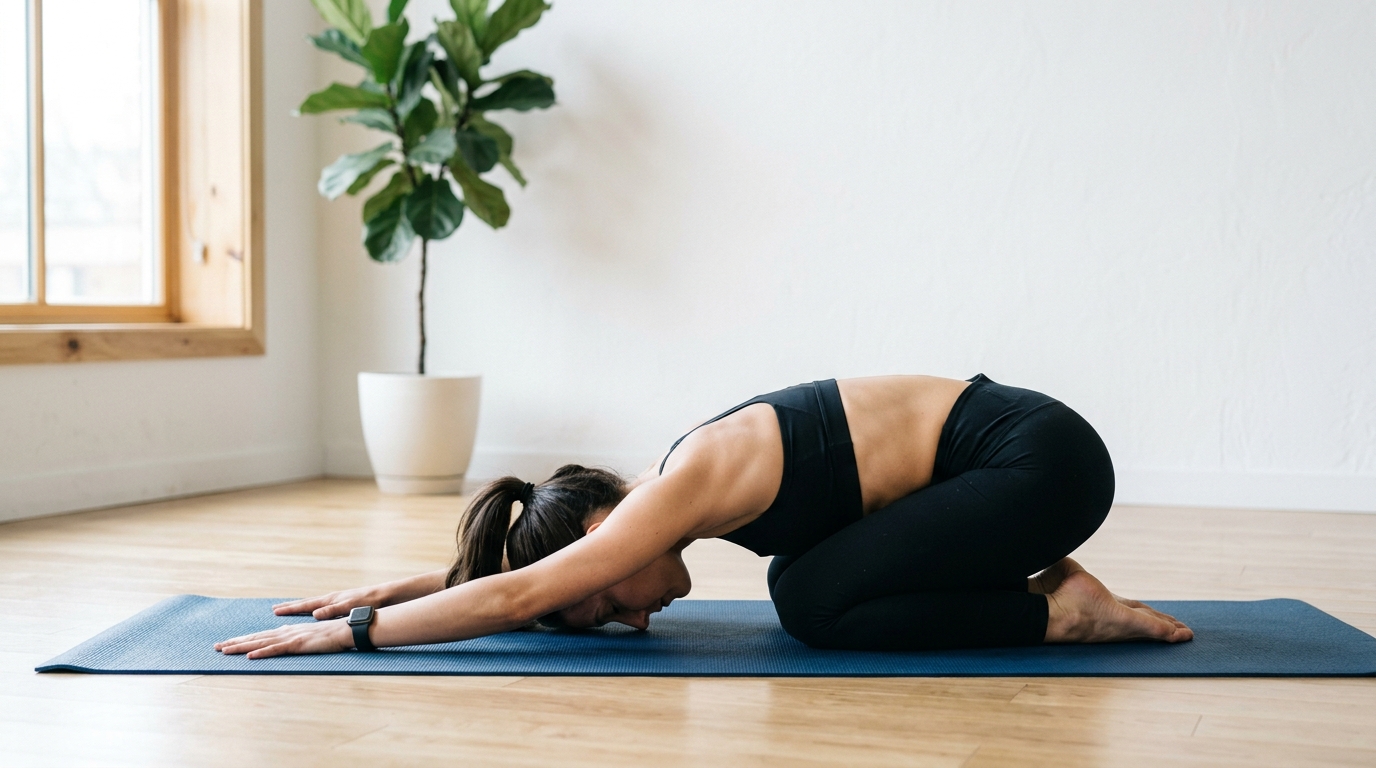
Katze-Kuh Wirbelsäulen-Mobilisation

Synchronized flexion and extension to lubricate intervertebral discs and restore spine mobility.
C2-C3 C3-C4 Erector Spinae Rectus Abdominis +1
Guide
Clinical back pain images demonstration - GLUTE & PELVIC STABILITY
GLUTE & PELVIC STABILITY
🎯 Posterior Chain
Kräftigung 3 mins • 3s

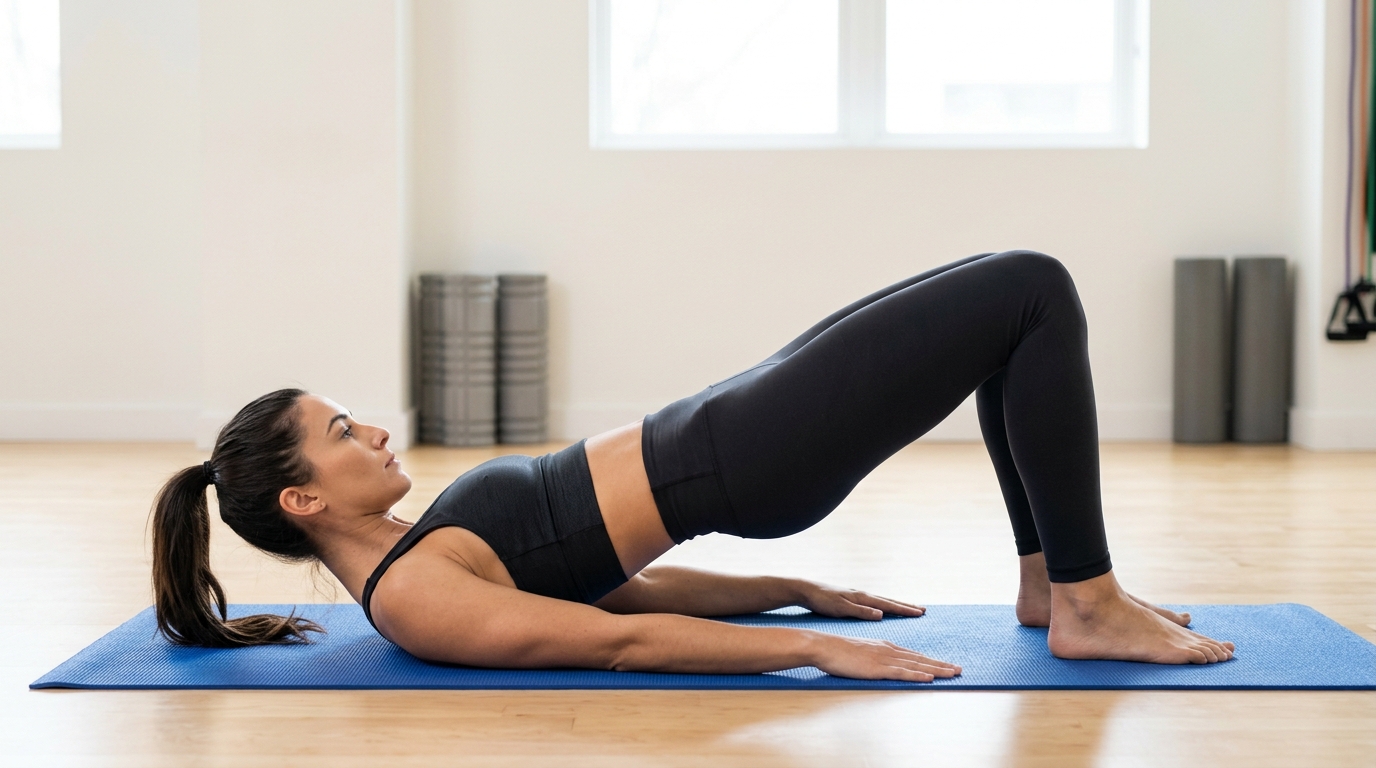
Glute Bridge zur LWS- & Beckenstabilisierung

Activates inhibited gluteals and posterior chain to remove excessive load from lumbar extensors.
L3-L4 L4-L5 Gluteus Maximus Hamstrings
Guide
Clinical back pain images demonstration - DESK ROTATION RESET
DESK ROTATION RESET
🎯 Thoracic & QL
Desk Relief 90 secs • 20s

Sanfte Wirbelsäulendrehung im Sitzen

Instant thoracic mobility and quadratus lumborum release you can do without leaving your office desk.
T4-T5 T5-T6 Thoracic Rotators Internal/External Obliques +1
Guide
Clinical back pain images demonstration - MCKENZIE EXTENSION
MCKENZIE EXTENSION
🎯 Disc Repositioning
Desk Relief 1 min • 3s

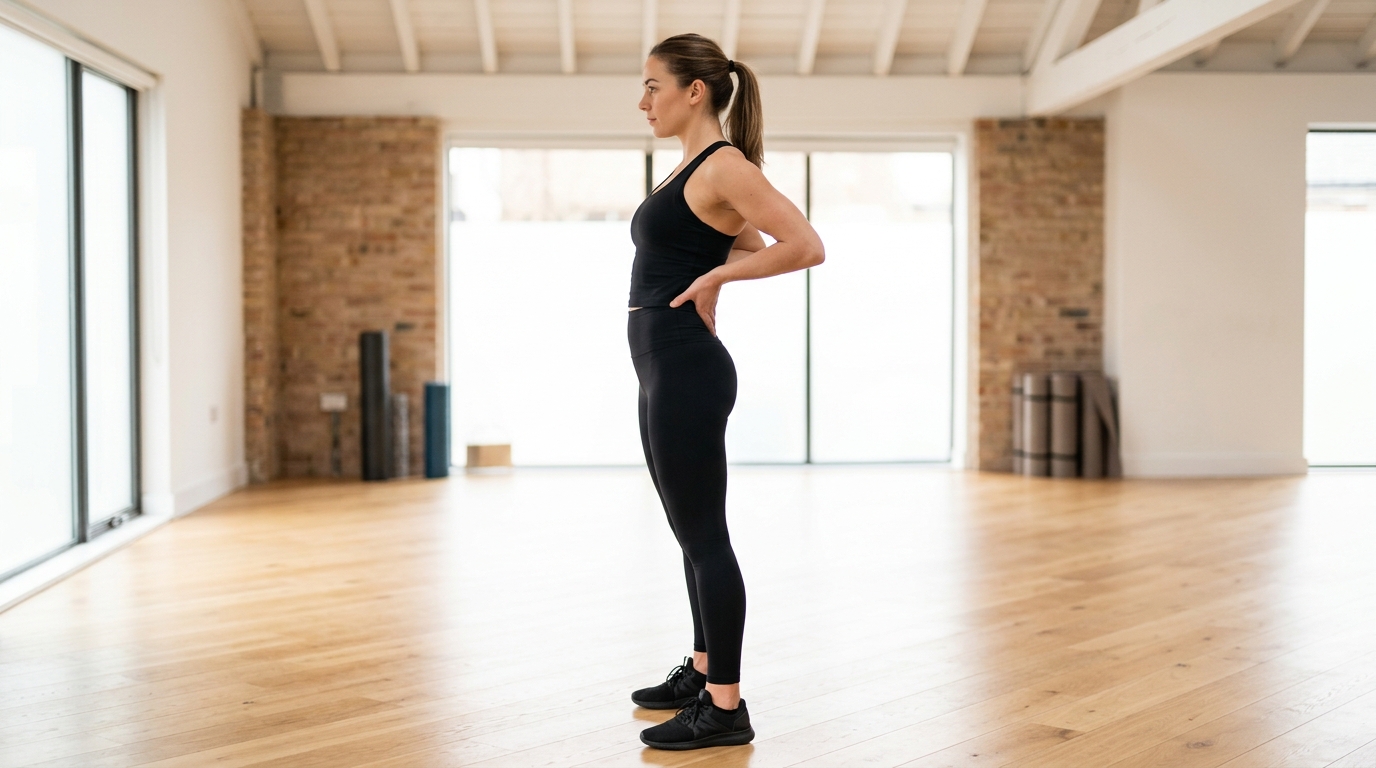
LWS-Streckung im Stehen (Büropause)

Quick standing posture reset to reverse hours of slumped sitting and reduce disc bulge pressure.
L3-L4 L4-L5 Anterior Longitudinal Ligament Psoas Major
Guide
Clinical back pain images demonstration - PSOAS & HIP DECOMPRESSION
PSOAS & HIP DECOMPRESSION
🎯 Anterior Hip Flexors
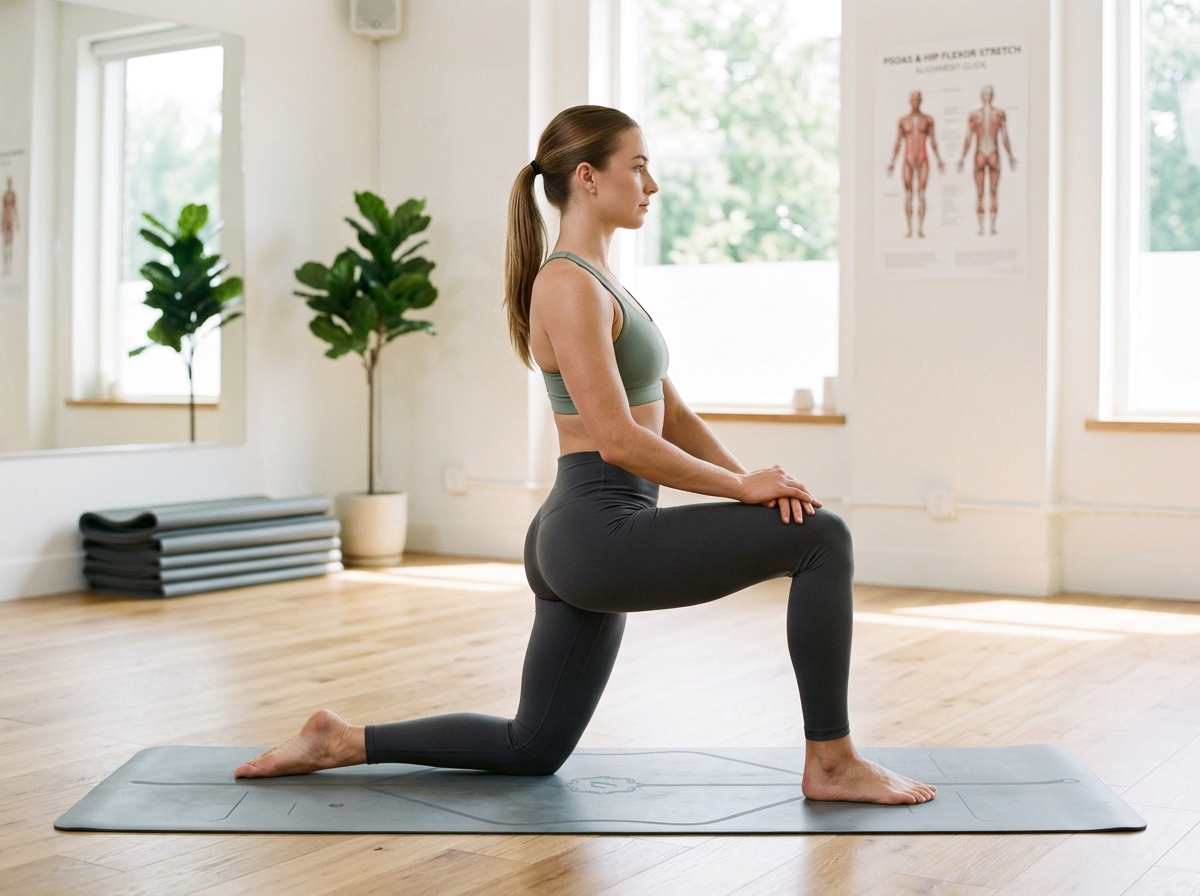
Desk Relief 3 mins • 30s

Kniende Hüftbeuger-Dehnung (Psoas)

Decompresses the lumbar spine by releasing chronically shortened iliopsoas muscles caused by prolonged sitting.
L1-L2 L2-L3 Iliopsoas Rectus Femoris +1
Guide
Clinical back pain images demonstration - SEATED DESK PIRIFORMIS
SEATED DESK PIRIFORMIS
🎯 In-Chair Nerve Relief
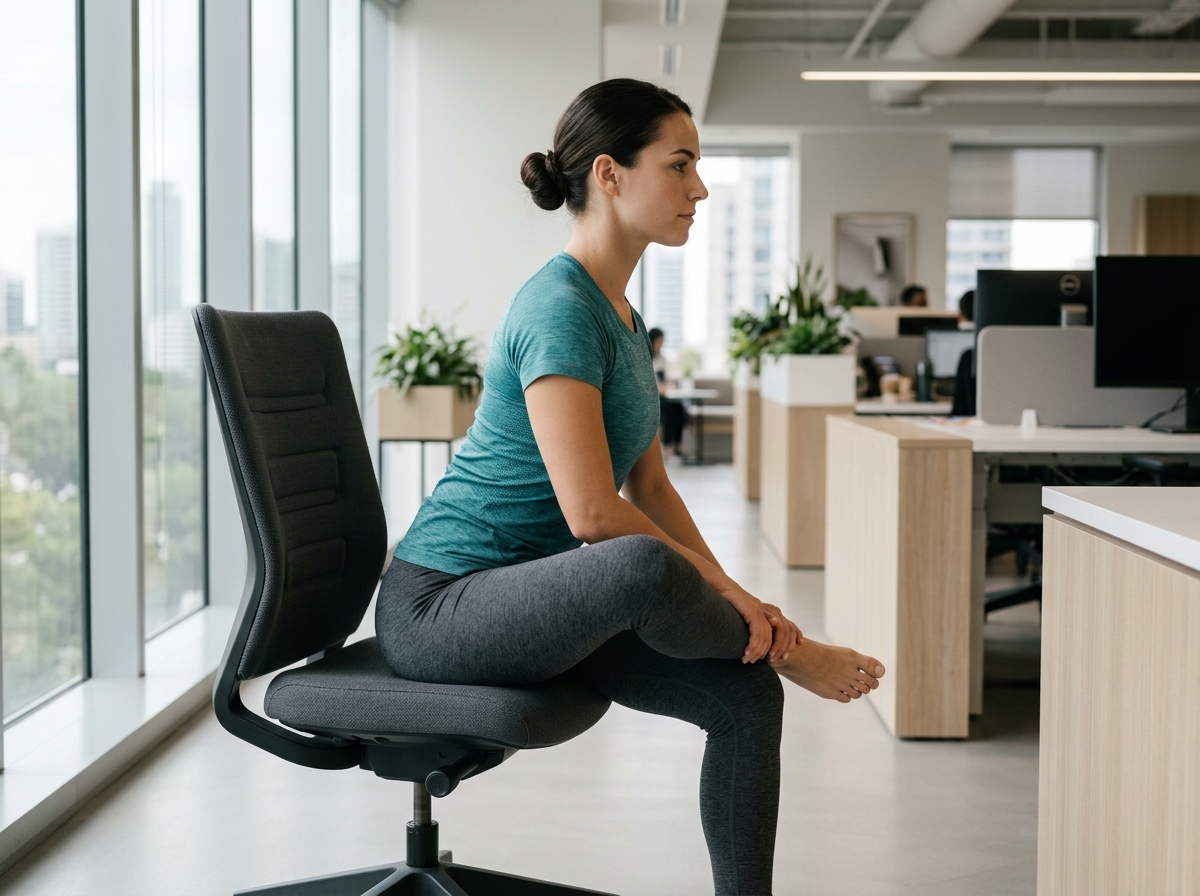
Desk Relief 2 mins • 30s

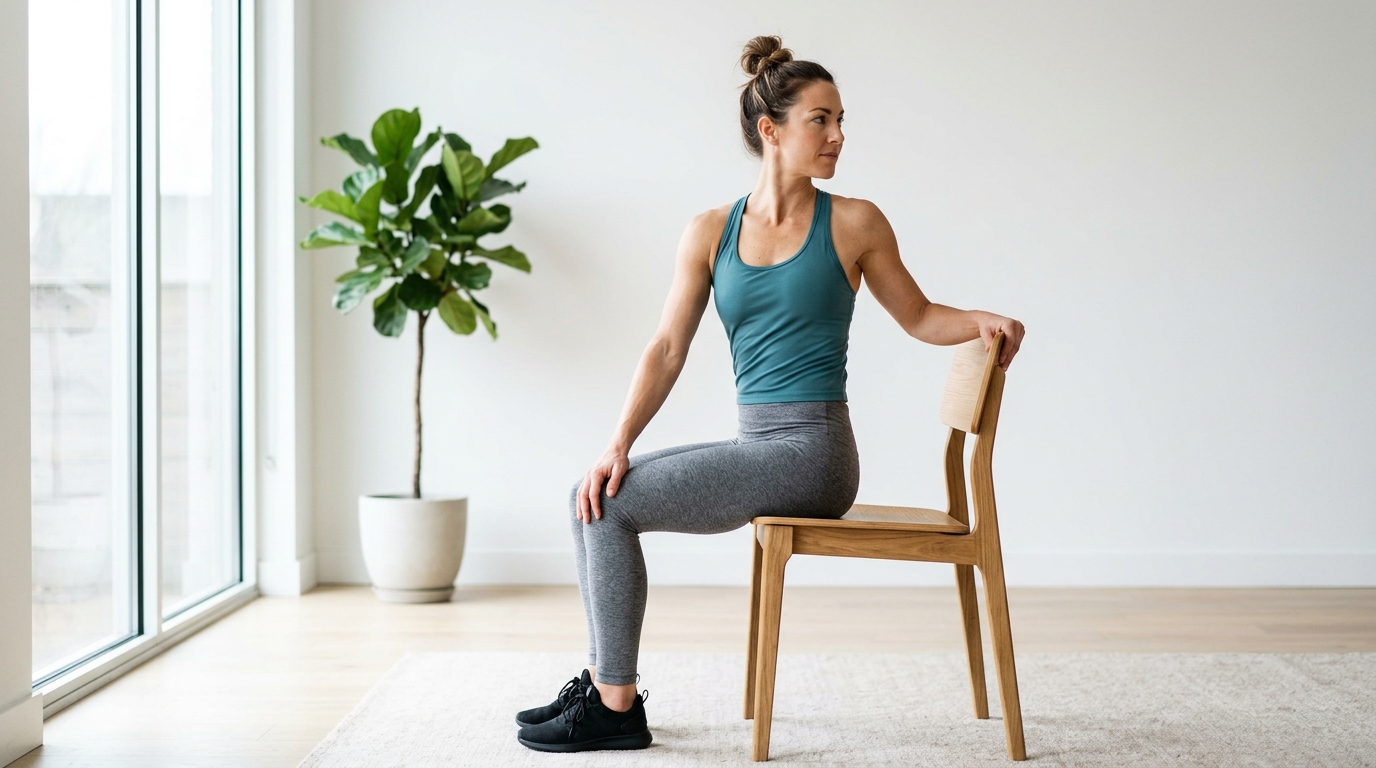
Vierer-Dehnung auf dem Stuhl (Büro)

Discreet and effective deep gluteal stretch you can perform right in your office chair during the workday.
L4-L5 L5-S1 Piriformis Gluteus Medius +1
Guide
Clinical back pain images demonstration - LATERAL QL STRETCH
LATERAL QL STRETCH
🎯 Quadratus Lumborum
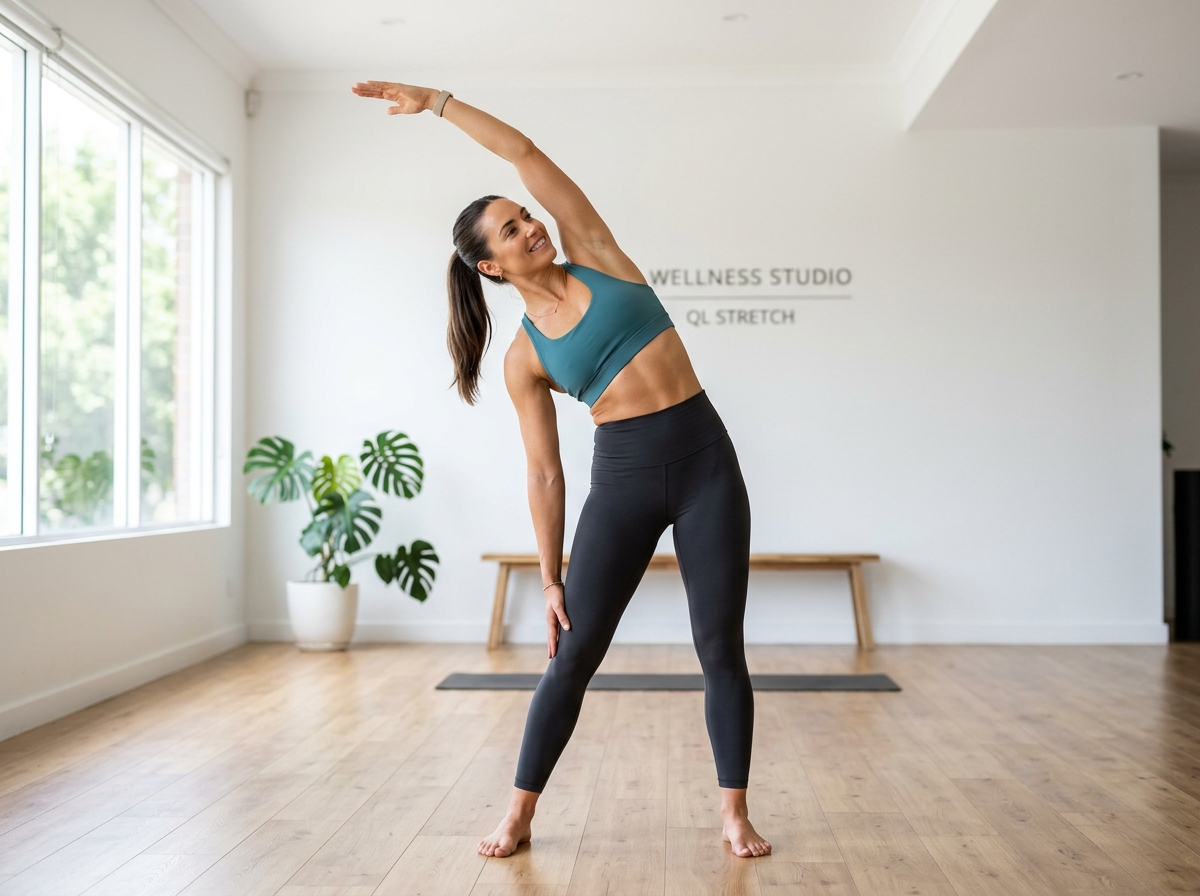
Desk Relief 2 mins • 25s

Seitneigung im Stehen (Quadratus lumborum Dehnung)

Decompresses the Quadratus Lumborum and side waist to relieve asymmetrical pelvic and lower back tightness.

T11-T12 T12-L1 Quadratus Lumborum Latissimus Dorsi +1
Guide
Clinical back pain images demonstration - SEATED CHAIR T-SPINE WAVE
SEATED CHAIR T-SPINE WAVE
🎯 Costovertebral Mobility
Desk Relief 90 secs • 3s

Katze-Kuh im Sitzen (BWS-Fokus)

Quick and discreet thoracic mobilization sequence designed specifically for desk workers and office chairs.

T1-T2 T2-T3 Thoracic Erector Spinae Rectus Abdominis +1
Guide
CLINICAL QUESTIONS & ANSWERS

Häufig gestellte Fragen: Büro-Rücken

Q How often should office workers do back exercises?
Perform micro-breaks of 60 seconds every 45 to 60 minutes (standing backward bends, seated figure-4 stretch), followed by a 10-minute targeted decompression and glute activation routine at the end of the workday.
Q Why do my hip flexors hurt my lower back after sitting?
The psoas muscle originates on the lumbar spine (T12-L4) and inserts onto the femur. Prolonged sitting locks the psoas in a shortened state; when you stand up, it pulls your lumbar vertebrae anteriorly, causing excessive arching and facet joint compression.
Q Are standing desks better than sitting desks for lower back pain?
A sit-stand transition desk is optimal. Alternating between 45 minutes of sitting and 15–20 minutes of standing prevents both sedentary flexion creep and static standing fatigue.
WISSENSCHAFTLICHE LITERATUR

Peer-Review Evidenz & Leitlinien

  • •
    "Effect of Hourly Microbreak Interventions on Musculoskeletal Discomfort in Sedentary Workers" — Applied Ergonomics (2023).
  • •
    "Gluteal Muscle Activation in Sedentary Adults: A Biomechanical Evaluation" — Journal of Electromyography and Kinesiology (2022).